


Tribes in the United States are working hard to build their economies amid economic uncertainty, limited Tribal revenues, and federal funding that barely scratches the surface of unmet needs.
When everyone is pulled in different directions and urgent needs take priority, it can seem impossible to find room for bigger picture planning. Recognizing this challenge, the Shakopee Mdewakanton Sioux Community stepped forward to support targeted strategic planning work sessions for Tribal leadership teams. Blue Stone designed the sessions to create opportunities and conditions for long-term leadership team planning, while providing meeting facilitation and structure.

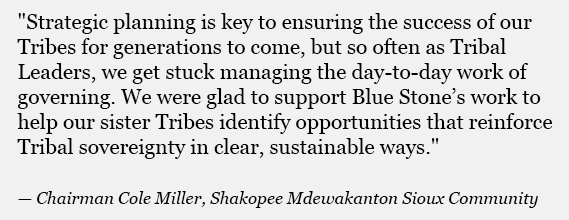
Through SMSC’s generous grant funding, Tribal Nations across the Midwest engaged with Blue Stone on focused, two-day strategic planning work sessions. Preparation started long before the sessions began: Blue Stone interviewed up to 13 Council members and key staff, studied each Tribe’s governance structure, and built materials tailored to each Nation’s real-world situation. By the time leadership teams walked into the room, real groundwork had already been laid.
The sessions took on the whole picture of governance, economic growth, jobs, housing, healthcare, investment, and scores of other issues in a single, focused conversation. Blue Stone’s facilitators helped teams work through tough issues, including unclear roles, communication gaps, and stalled projects. Every voice was heard, and the dialogue moved toward real action.
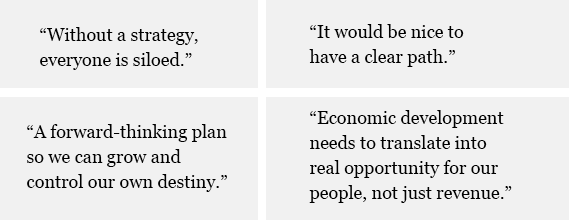
Blue Stone’s role was to facilitate and make space for leadership teams to tackle tough challenges together, including defining priorities, sorting out roles and responsibilities, and creating the conditions for leadership teams to work through complex, interconnected issues to build a shared direction.

Participating Nations identified a wide range of interconnected priorities. The table below reflects the categories of work that emerged, drawn from actual action plans developed during the sessions.
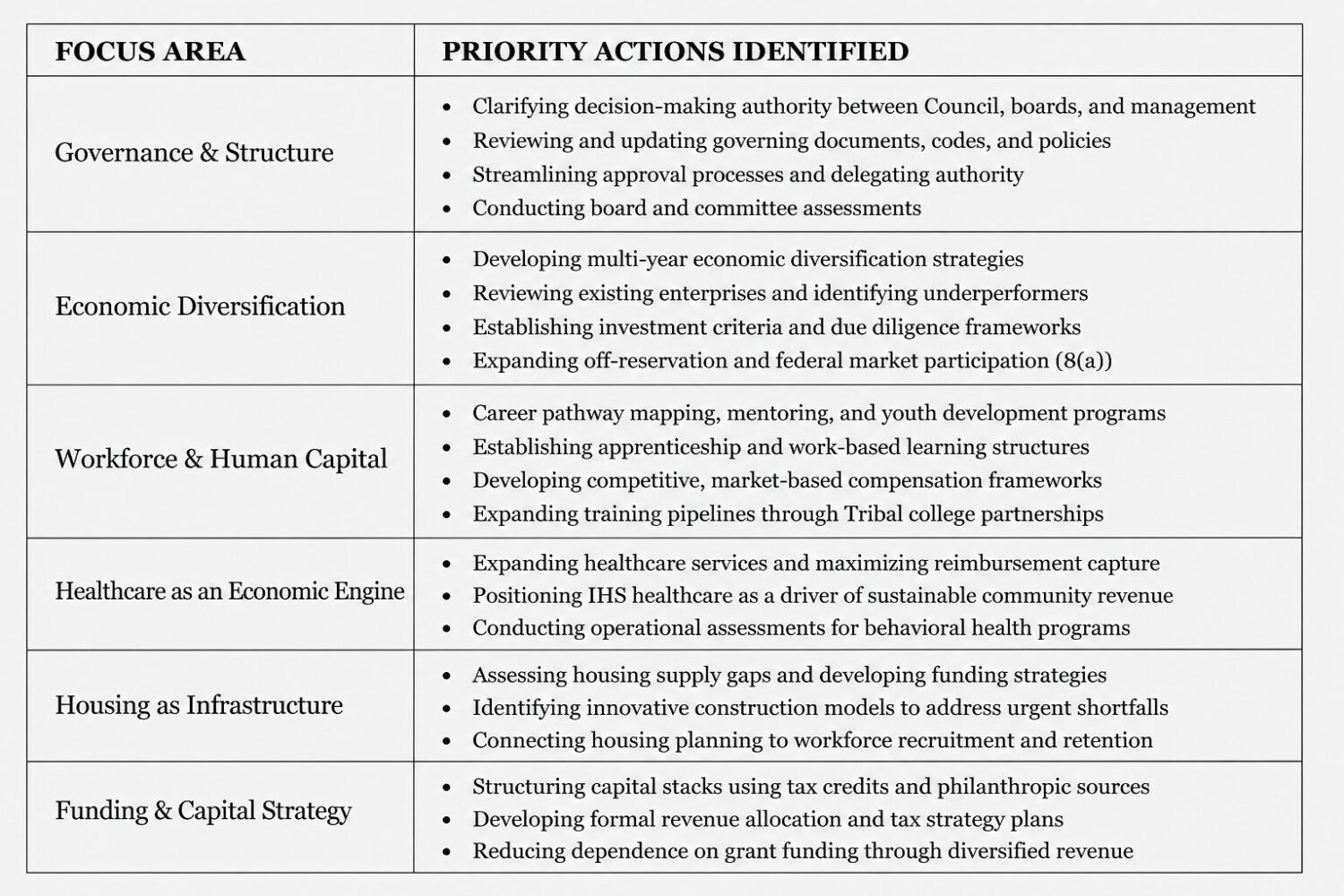

At the end of each session, teams walked away with written action plans, clearer ownership of goals and priorities, and a shared sense of what comes next.
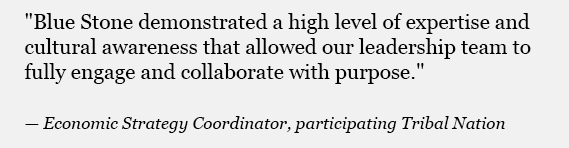
One Tribal Chairman described the process as generating “greater clarity and momentum” to advance nation-building and economic development work. Another Nation’s leadership credited Blue Stone’s approach with fostering enthusiasm and commitment among participants, ensuring that outcomes were not just identified but positioned to influence future strategy. Leadership teams left with clearly defined priorities, identified ownership, and actionable next steps tied to real timelines.
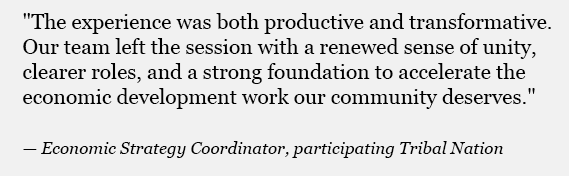
For many, these strategic planning sessions were the first opportunity that Tribal Leaders have had to step back from putting out fires and instead focus on a single, unified strategy. For Nations that had not had the opportunity to complete a formal strategic plan in some time, the strategic planning sessions provided a foundation to build from. Leaders left with clear priorities, shared direction, and a starting point for the ongoing planning work that does not end when the session is over.
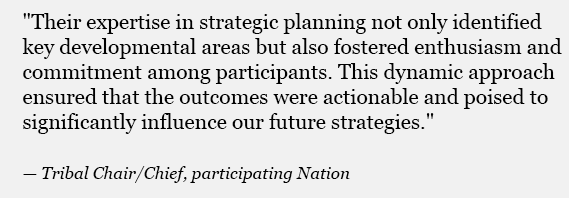
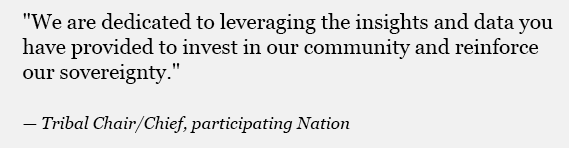

Strategic planning matters now more than ever. Tribal governments face challenges today with the same resilience and determination that have carried them through generations. Through every shift in federal policy, Tribes have continually adapted, protected their people, and pushed their priorities forward. Sustained, forward-looking strategic planning positions Tribal Nations to protect what they have built and pursue what they have prioritized, regardless of what happens around them.
Leadership teams reported that they are now stronger, priorities are clearer, and projects that once stalled are moving again. Nations that entered the process managing complexity but needing better structure are now executing against clear, leadership-aligned plans. The result is not just better plans. It is better-positioned leadership, ready to carry their communities’ priorities forward with intention and confidence. That is what happens when opportunity meets structure.