
In most Tribal HR offices, the I-9 form has lived a quiet life. Signed in ballpoint, filed in a cabinet, joined to the other paperwork nobody expects to read again. For decades, that has been enough.
It will not be enough much longer.
Federal employment verification is moving in one direction: digital, standardized, audit-ready. Two changes in particular deserve attention, and most of the operational risk for Tribal employers right now sits inside them.
The Permanent Remote Verification Option
The most consequential shift is the introduction of a permanent remote verification option for Form I-9, available only to employers enrolled in E-Verify and in good standing. For Tribal entities with geographically dispersed workforces, the appeal is real. Gaming operations spanning multiple properties. Healthcare systems with traveling clinicians and remote credentialing. Corporate and administrative services teams working from home offices, sometimes across state lines. Remote verification began as a pandemic workaround; it is now a permanent option, and one Tribal HR teams will increasingly want to use.
The conditions matter. Remote verification requires live video review of the employee’s original documents. Not a scanned copy emailed in advance, not a photo on file, but a live session in which the document is shown to the verifier. The session has to be documented and the records retained. And there is one detail that often catches organizations: the option has to be applied consistently across the workforce. A practice in which some hires get remote review and others get in-person review, with no documented policy distinguishing the two, is exactly the kind of inconsistency federal auditors look for.
For Tribal Nations leveraging remote hiring across gaming, healthcare, and corporate services, the practical message is simple: enroll in E-Verify intentionally, write down the policy, and apply it the same way every time.
The 2025 Form
The 2025 edition of the Form I-9 is now mandatory. The form itself is not dramatically different from its predecessor. Revised language, updated instructions, modest formatting changes. But its rollout is the part that quietly trips organizations up. Internal procedures need to be updated to match the new terminology. Onboarding staff need training on the revised document requirements. Older versions of the form, still sitting in HR templates, intake packets, and shared drives across departments, need to be retired before they get used by accident.
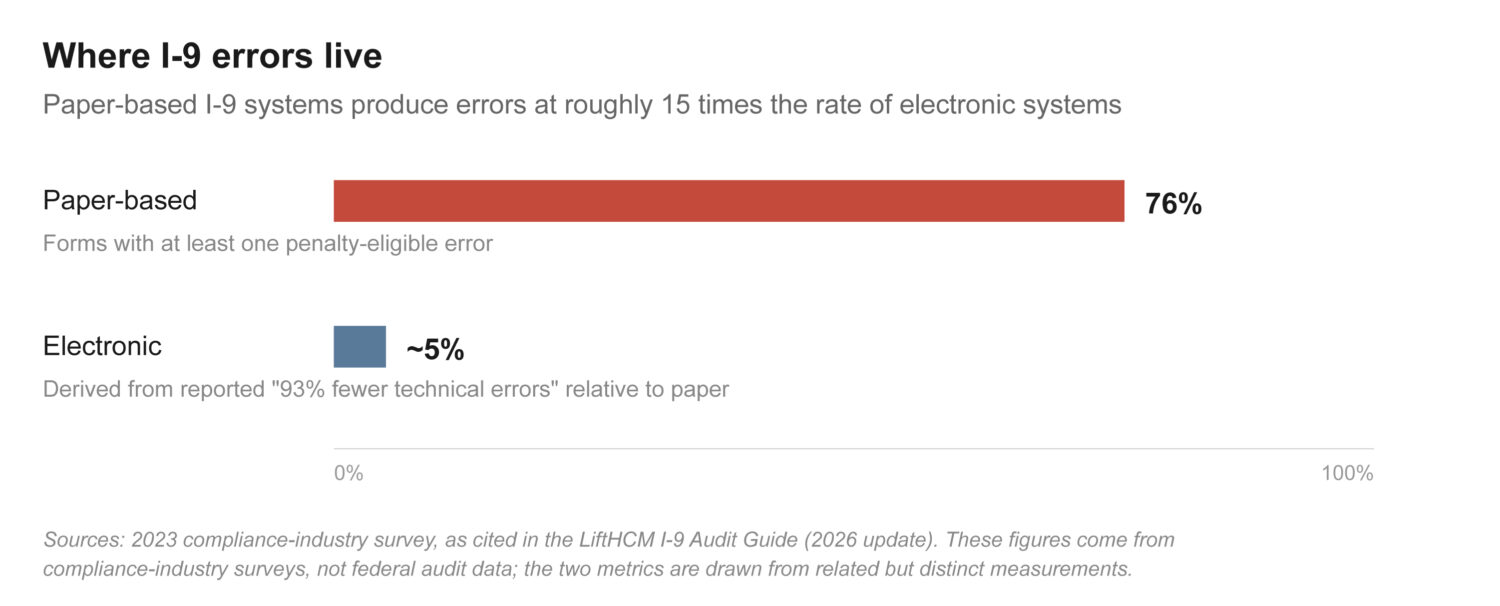
Electronic I-9 platforms have absorbed these updates without their users much noticing. Paper-based workflows have not. For organizations still working from physical forms and folders, the responsibility for catching the change is entirely internal, and the consequences for missing it are external.
This is not a routine HR update. It is a governance question wearing an HR uniform.
The Shape of the Problem
The decentralized character of Tribal employment is part of what makes it work. Hiring happens across governments, enterprises, gaming operations, healthcare systems, housing authorities, and administrative offices, each with its own pace, its own people, its own habits. It is also exactly what federal auditors look for. A department still using last year’s form. An enterprise that conducts document review one way while another does it differently. Retention gaps. Inconsistent application of the remote verification option. Missing signatures, missing dates, missing copies.
None of these are unusual. None of them, on their own, suggest negligence. Under federal review, they look like risk.
The challenge is rarely the rule itself. It is the discipline of applying the same rule across an organization that was never designed to behave uniformly.
Why the Timing Matters
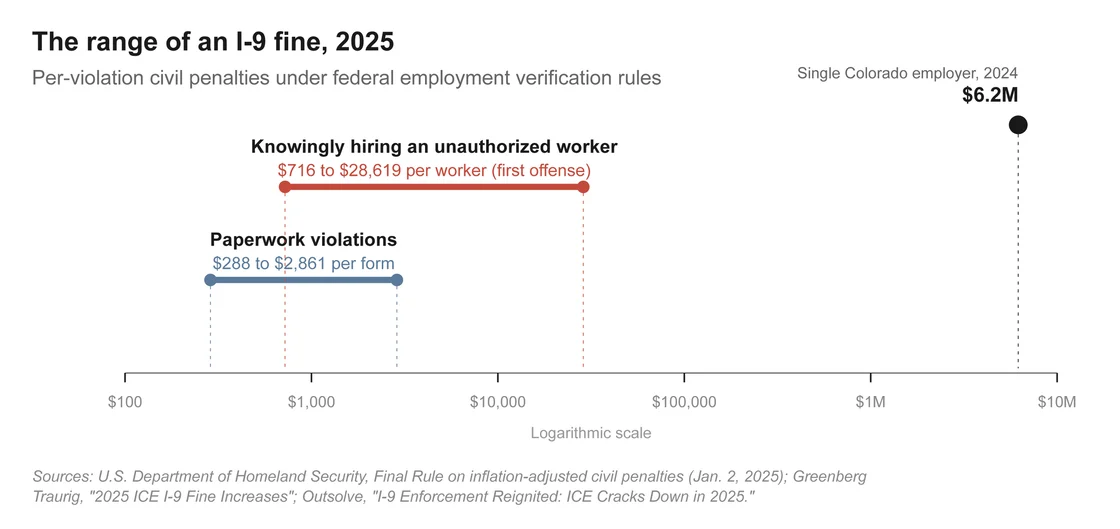
I-9 compliance rarely commands attention until an audit forces it to, and by then the corrections are reactive: expensive, disruptive, and conducted under the unhappy gaze of an Immigration and Customs Enforcement officer. ICE has been busier in recent years and less forgiving. Penalties have risen. Documentation deficiencies that once drew a warning now draw fines. The federal posture toward paper-era practice has visibly hardened.
Sovereignty shapes how Tribal governments build and run their internal systems. Federal employment verification still applies in specific operational contexts. The two coexist. Clarity, in that overlap, is the safest place to stand.
What Forward Posture Looks Like
The strongest move available right now is the unglamorous one: get ahead of it.
For most organizations, that means moving from paper to electronic I-9 systems. Today’s platforms handle much of the administrative burden automatically. They flag errors before forms are finalized, maintain audit trails, update forms when federal requirements change, and create consistency across departments, locations, and hiring teams. That consistency matters. It reduces the likelihood that different parts of the organization develop different practices over time.
For organizations not yet ready for that transition, the steps are still manageable. Confirm every entity is working from the 2025 form. Commit to a single I-9 procedure and apply it consistently across departments. Evaluate E-Verify enrollment strategically, particularly for entities with remote or multi-site workforces. Audit a sample of completed forms internally, before someone else does it externally. Train the people who handle onboarding. None of this is heavy lifting. Taken together, it shifts the posture of the organization from defensive to prepared.
The Broader Point
Tribal Nations are building enterprises of real scale and complexity. The HR systems behind those enterprises are part of the architecture of long-term growth. Forms, retention schedules, document workflows. These are not the glamorous part of governance. But when they fail, they fail in ways that draw federal attention and consume leadership time. When they work, they recede into the background, which is where compliance is supposed to live.
Compliance may be the baseline requirement. Clarity is the actual outcome.
How Blue Stone Strategy Partners Can Help
Blue Stone Strategy Partners works with Tribal Nations on the systems that operate quietly until they don’t: HR structures, onboarding workflows, compliance reviews, and the transition from paper-based processes to electronic ones that keep pace with federal requirements. Our work in this space includes reviewing current I-9 practices, supporting transitions to electronic systems, standardizing onboarding across enterprises, and developing implementation strategies sized to the capacity of the organization.
If your I-9 practices have not been reviewed recently, this is a reasonable moment to look at them, while the choice still belongs to you and not to an auditor.